
THE DESTINATION / Puzzle adventure
Chicory: A Colorful Tale
Chicory makes a landscape feel personal by letting you change its appearance and use those changes to explore. Its brush connects creativity, traversal and a story about artistic pressure with unusual warmth.
TRAVEL NOTES
Game facts
- Developer
- Wishes Ultd., Greg Lobanov, Alexis Dean-Jones, Lena Raine, Madeline Berger, A Shell in the Pit
- Publisher
- Finji
- Released
- 10 June 2021
- Platforms
- Windows · macOS (Steam edition)
- Model
- Paid game
- PEGI
- 7 — Nintendo Switch edition; not a separate PC classification
- Players
- Single-player · Multi-player · Co-op · Shared/Split Screen Co-op
- Length
- Short
- Difficulty
- 2 / 5 · Approachable
- Steam Deck
- Verified
PEGI source ↗ · Steam Deck status source ↗
Edition: Base game
The score, explained
The interest and responsiveness of the core decisions and actions.
How progression, exploration and goals fit together.
The coherence of the visual, musical and narrative presentation.
How clearly the game explains its rules and offers useful ways to engage.
The depth of optional goals, alternative approaches and reasons to return.
The First Hours
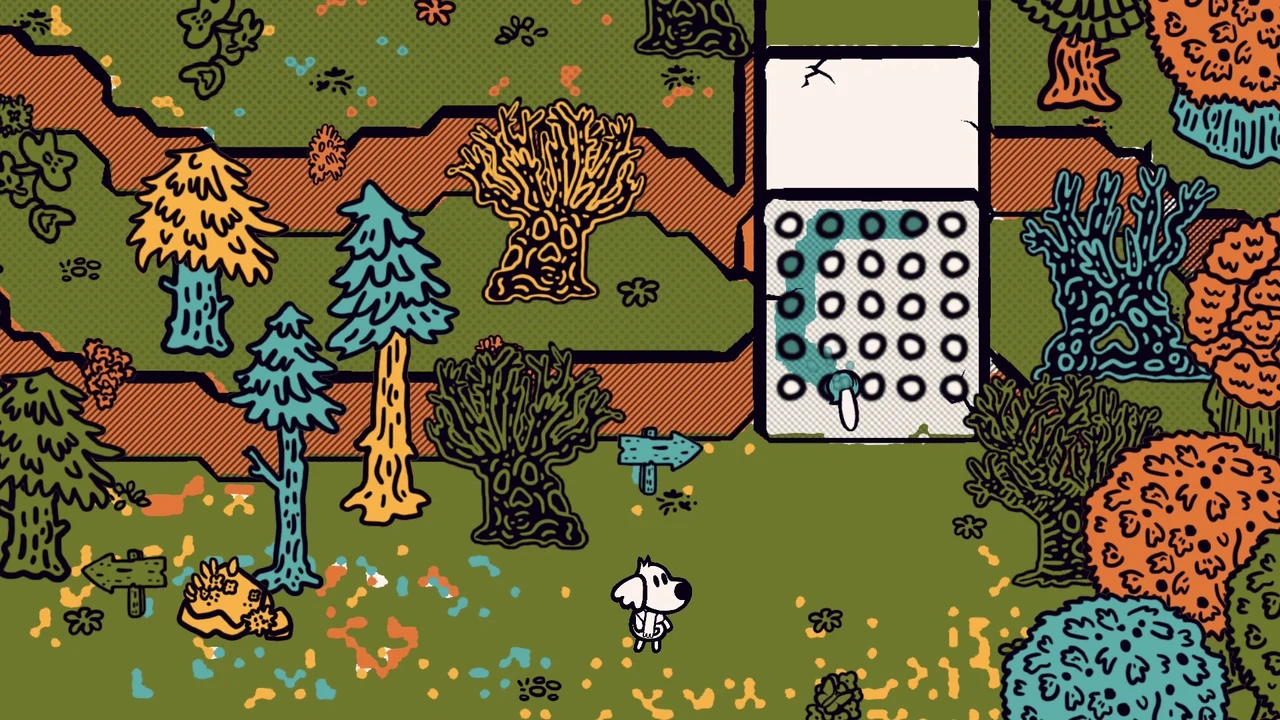
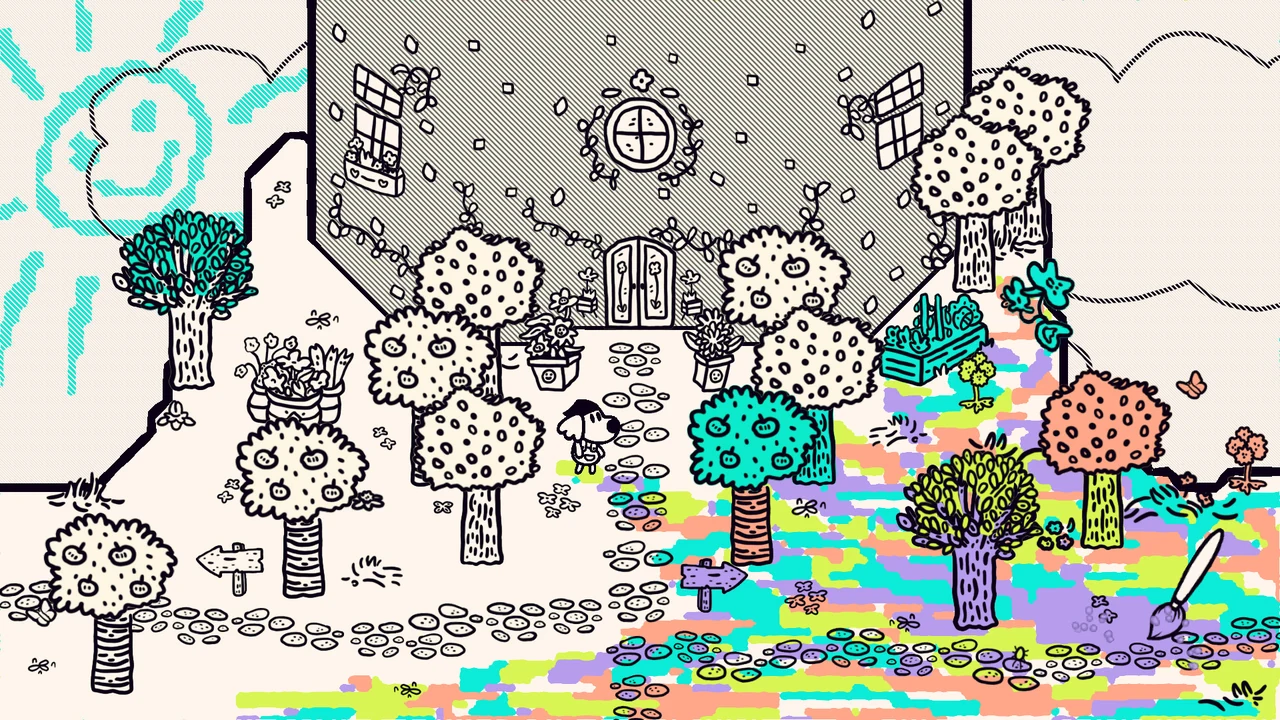
Chicory begins in a world whose missing colour is immediately visible and immediately actionable. Taking up the brush means you can paint the surroundings rather than simply search for the next conventional weapon or key. Characters and places give that freedom context: the adventure concerns a community, the expectations placed on its artists and a protagonist learning what it means to hold the brush. At first, colouring can be enjoyed as a direct creative activity, but progress introduces practical uses for the same tool. The opening therefore establishes two reasons to examine a scene. You might see a route that needs a particular interaction, or a place you would like to make your own. Both forms of attention belong to the central adventure rather than separate optional modes.
Why It Works
Painting is unusually well integrated because it can support expression and problem solving without requiring two unrelated control systems. A space becomes a surface to decorate, a place to search and a route affected by the brush's developing abilities. That makes revisiting an area more personal than simply checking whether a new key opens an old door. The community also helps give the colour meaning: characters occupy the places being changed, and the story asks questions about confidence and artistic expectation that fit the activity you are performing. Chicory's world earns its warmth through this connection. The attractive presentation is not only something supplied by the developers for the player to admire. It includes visible traces of the player's own decisions, even when those decisions are as simple as favouring one colour.
Where It Stumbles
Creative freedom can pull against the pace of the adventure. A player interested in following the story may keep stopping to repaint a scene, while someone absorbed in decoration may resent the need to move on and unlock another practical ability. Neither approach is wrong, but the game depends on finding a comfortable balance between them. Its lighter interactions also provide a different kind of satisfaction from demanding action or a deep construction system. The brush is versatile within the adventure, not a replacement for a full illustration package. Finally, the story's interest in creative confidence gives some conversations an emotional weight beyond the cheerful appearance. Readers should choose it for that mixture of expression and character, rather than assuming the colourful premise promises a completely weightless diversion.
Who Should Play It
Chicory belongs on the itinerary if you want to participate in a world's appearance instead of only travelling through it. It is especially appealing when creative experimentation and a character-led story sound like complementary activities. Artistic skill is not the important qualification; a willingness to try a colour, inspect the result and keep exploring matters more. Someone who wants frequent combat rewards or highly demanding movement should look elsewhere in the collection. Chicory offers a more personal form of progress, where a new ability can improve access while an old place still bears your choices. Choose it when that continuing relationship with a setting sounds attractive, and when a story about the pressure to create can make the brush feel more meaningful than a convenient puzzle-solving device.
The verdict
Chicory makes a landscape feel personal by letting you change its appearance and use those changes to explore. Its brush connects creativity, traversal and a story about artistic pressure with unusual warmth.
Reasons to play
- Painting changes how spaces are used as well as how they look
- A recognisable community gives creative choices context
- New brush abilities keep exploration developing
Reasons to think twice
- Decorating can interrupt the adventure's momentum
- Its gentler interactions will not satisfy every appetite for action
See the game
Assist & accessibility
Explore the available settings and control options on the official game page before choosing your setup.
Parents’ guide
Players: Single-player · Multi-player · Co-op · Shared/Split Screen Co-op. No in-game purchase marker in the checked Steam listing. Separate downloadable content may be sold.
Age classification: 7. Nintendo Switch edition; not a separate PC classification
A useful starting tip
Try painting a suspicious surface before assuming you need another conventional key or switch.
A different direction
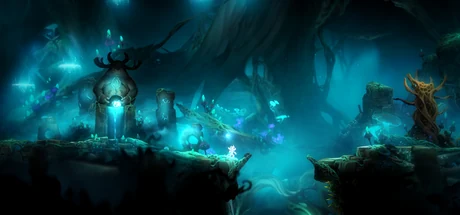
Compare this with Ori and the Blind Forest: Definitive Edition: Ori’s Definitive Edition suits players who want expressive movement, connected exploration and a clearly defined story. The connected map and movement abilities give its illustrated landscapes a strong sense of purpose.
Official sources
Reviewed: November 2026
You might also like
 TUNICRead review →
 Ori and the Will of the WispsRead review →
 Ori and the Blind Forest: Definitive EditionRead review →