
THE DESTINATION / Metroidvania
Ori and the Blind Forest: Definitive Edition
Ori’s Definitive Edition suits players who want expressive movement, connected exploration and a clearly defined story. The connected map and movement abilities give its illustrated landscapes a strong sense of purpose.
TRAVEL NOTES
Game facts
- Developer
- Moon Studios GmbH
- Publisher
- Xbox Game Studios
- Released
- 27 April 2016
- Platforms
- Windows (Steam edition)
- Model
- Paid game
- PEGI
- 7 · Violence — Steam UK listing
- Players
- Single-player
- Length
- Short
- Difficulty
- 4 / 5 · Challenging
- Steam Deck
- Verified
PEGI source ↗ · Steam Deck status source ↗
Edition: Base game
The score, explained
The interest and responsiveness of the core decisions and actions.
How progression, exploration and goals fit together.
The coherence of the visual, musical and narrative presentation.
How clearly the game explains its rules and offers useful ways to engage.
The depth of optional goals, alternative approaches and reasons to return.
Movement opens the forest
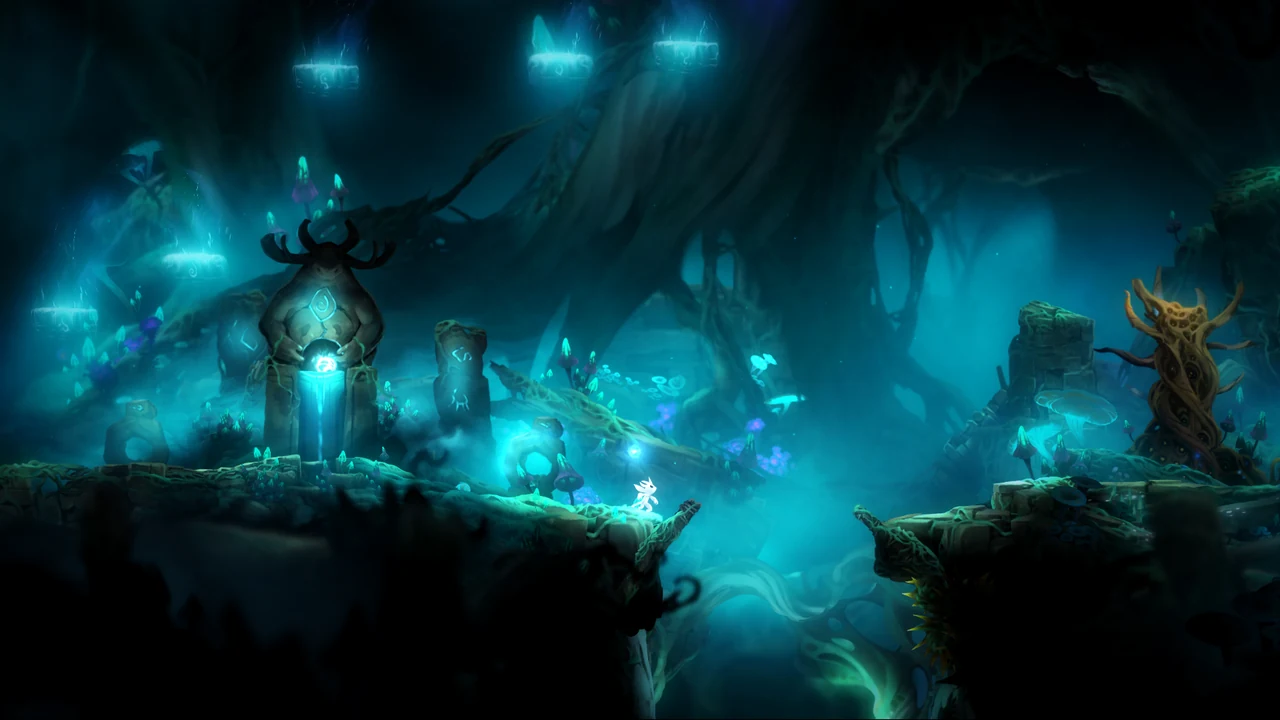
Ori and the Blind Forest: Definitive Edition builds its action-platforming around developing movement through Nibel. The edition's official description adds abilities including Dash and Light Burst, along with further areas and secrets. That makes traversal the strongest reason to consider this particular entry: a new action can change both a difficult sequence and the routes available through the world. The strongest element is that connection between execution and exploration. The recommendation assumes that movement challenges are appealing in their own right. A player drawn only to the painted forest or emotional story may still need to repeat demanding sections, so visual warmth should not be treated as a guarantee of a mechanically effortless journey.
An edition designed for returning routes
The Definitive Edition includes expanded areas, additional story material, multiple difficulty modes and support for revisiting the world. Travel between Spirit Wells helps connect that backtracking to the search for remaining secrets. We rate the structure positively because a connected platform adventure benefits when new abilities give earlier spaces another use. Edition specificity matters: these features should not be casually attributed to every release carrying the original game's name. Readers who prefer a strict sequence of independent stages may still find return travel less attractive than forward movement. Ori's structure is a better match when remembering a possible route and coming back with a stronger movement vocabulary feels like an important part of making progress.
A forest with an expressive visual identity
The hand-painted imagery and animated character presentation give Nibel a distinctive identity, while the official story describes themes of love, sacrifice and hope. The presentation works through supporting the journey through a living environment rather than simply placing action against interchangeable scenery. The emotional premise deserves separate consideration from the game mechanics. A player can appreciate the artwork yet prefer less demanding traversal, or enjoy the platforming without responding to the story in the same way as another reader. This review makes a judgement about that creative coherence. The forest's escape sequences bring movement abilities together under pressure, while exploration gives quieter opportunities to understand them. Nibel's changing spaces make the journey visually inviting, but the platforming remains a central part of experiencing that world.
Choose movement and exploration together
Ori: Definitive Edition suits someone who wants an authored story to develop alongside a growing ability to move through an interconnected place. Optional secrets and revisiting areas offer reasons to continue beyond the most direct journey, but the game remains a finite adventure rather than a repeat-run system. Our return score reflects that form. Celeste is an informative alternative when precise movement is the main attraction and a series of concentrated local challenges is preferable to searching a larger connected map. Choose Ori when both the forest and the act of navigating it are compelling. The edition's added tools strengthen that proposition, but they do not change the basic requirement to enjoy execution-focused platforming. The connected map and movement abilities give its illustrated landscapes a strong sense of purpose.
The verdict
Ori’s Definitive Edition suits players who want expressive movement, connected exploration and a clearly defined story. The connected map and movement abilities give its illustrated landscapes a strong sense of purpose.
Reasons to play
- Definitive Edition adds areas and movement abilities
- Multiple difficulty modes offer a choice of challenge
- Backtracking support helps revisit the connected world
Reasons to think twice
- Movement challenges may still require repeated attempts
- This is a distinct edition from the original release
- Windows is the only native Steam platform listed
See the game

Assist & accessibility
Explore the available settings and control options on the official game page before choosing your setup.
Parents’ guide
Players: Single-player. No in-game purchase marker in the checked Steam listing. Separate downloadable content may be sold.
Age classification: 7. Violence Steam UK listing
A useful starting tip
Use a newly learned movement ability in a familiar area before assuming every remaining route requires another upgrade.
A different direction
Compare this with Chicory: A Colorful Tale: Chicory makes a landscape feel personal by letting you change its appearance and use those changes to explore. Its brush connects creativity, traversal and a story about artistic pressure with unusual warmth.
Official sources
Reviewed: November 2026
You might also like
 TUNICRead review →
 Ori and the Will of the WispsRead review →
 Chicory: A Colorful TaleRead review →