THE DESTINATION / Action platformer
The Messenger
A nimble platform adventure whose shifting structure rewards more than straightforward stage clearing. The shift between visual eras accompanies a changing adventure structure, giving the presentation a practical role.
TRAVEL NOTES
Game facts
- Developer
- Sabotage
- Publisher
- Devolver Digital
- Released
- 30 August 2018
- Platforms
- Windows (Steam edition)
- Model
- Paid game
- PEGI
- 7 — Nintendo Switch edition; not a separate PC classification
- Players
- Single-player
- Length
- Medium
- Difficulty
- 4 / 5 · Challenging
- Steam Deck
- Verified
PEGI source ↗ · Steam Deck status source ↗
Edition: Base game
The score, explained
The interest and responsiveness of the core decisions and actions.
How progression, exploration and goals fit together.
The coherence of the visual, musical and narrative presentation.
How clearly the game explains its rules and offers useful ways to engage.
The depth of optional goals, alternative approaches and reasons to return.
Movement carries the message
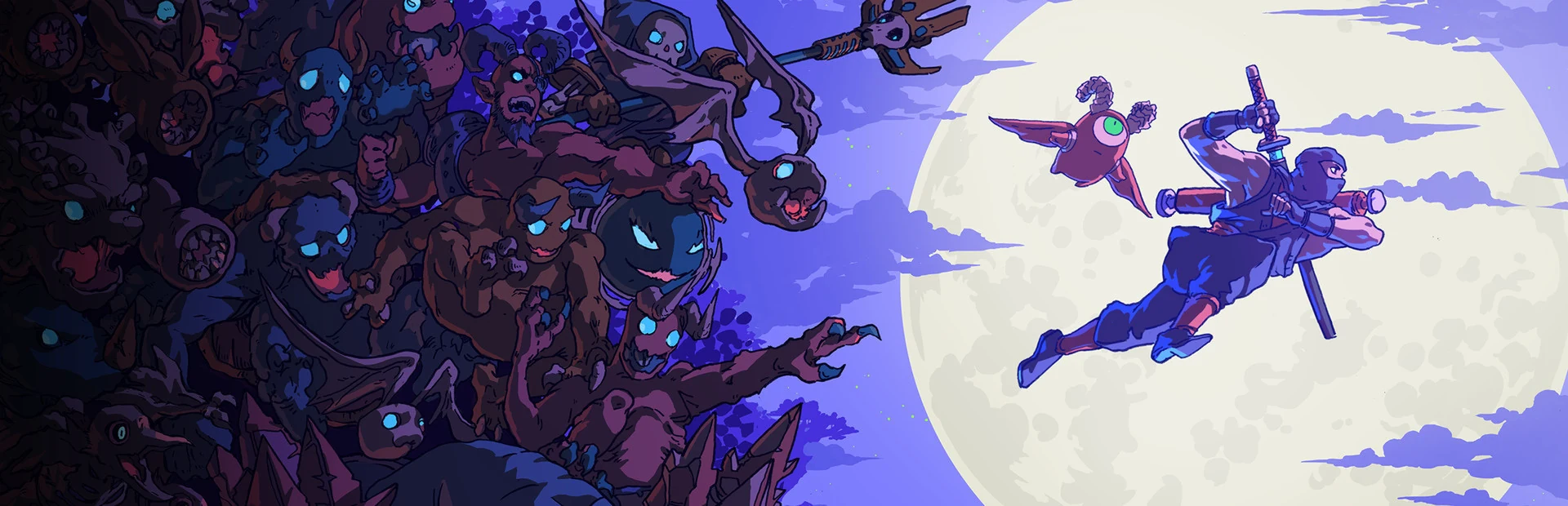
The Messenger begins with a young ninja carrying a vital scroll through a world under attack. That clear premise gives the player an immediate direction, while the available focus on acrobatics makes movement the main attraction. Combat, traversal and new abilities sit inside the same action-platforming vocabulary, encouraging the player to improve how actions connect rather than simply wait for a stronger character. The strongest element is that focused design. Readers who enjoy learning a movement system have a clear reason to investigate; those who mainly want gentle sightseeing should pay more attention to the platforming demands than the colourful sprites. Cloudstepping refreshes the jump after striking an enemy or object, turning a basic attack into a traversal tool.
A journey that changes its shape
The game signals that the initial action-platformer structure develops into a broader time-travel adventure. Hidden levels, branching paths and character upgrades give that change a mechanical foundation rather than leaving it as a story twist alone. It creates an interesting choice for prospective players. If you welcome a game that asks you to reinterpret familiar spaces, the expanding structure is part of the attraction. If you want a clean series of stages with little return travel, it may feel less focused as it opens out. We score the structure positively for building new questions around established movement, but slightly below the core-play score because that shift is inherently a matter of preference. The beginning is not the complete promise of the game.
Two visual traditions in one adventure
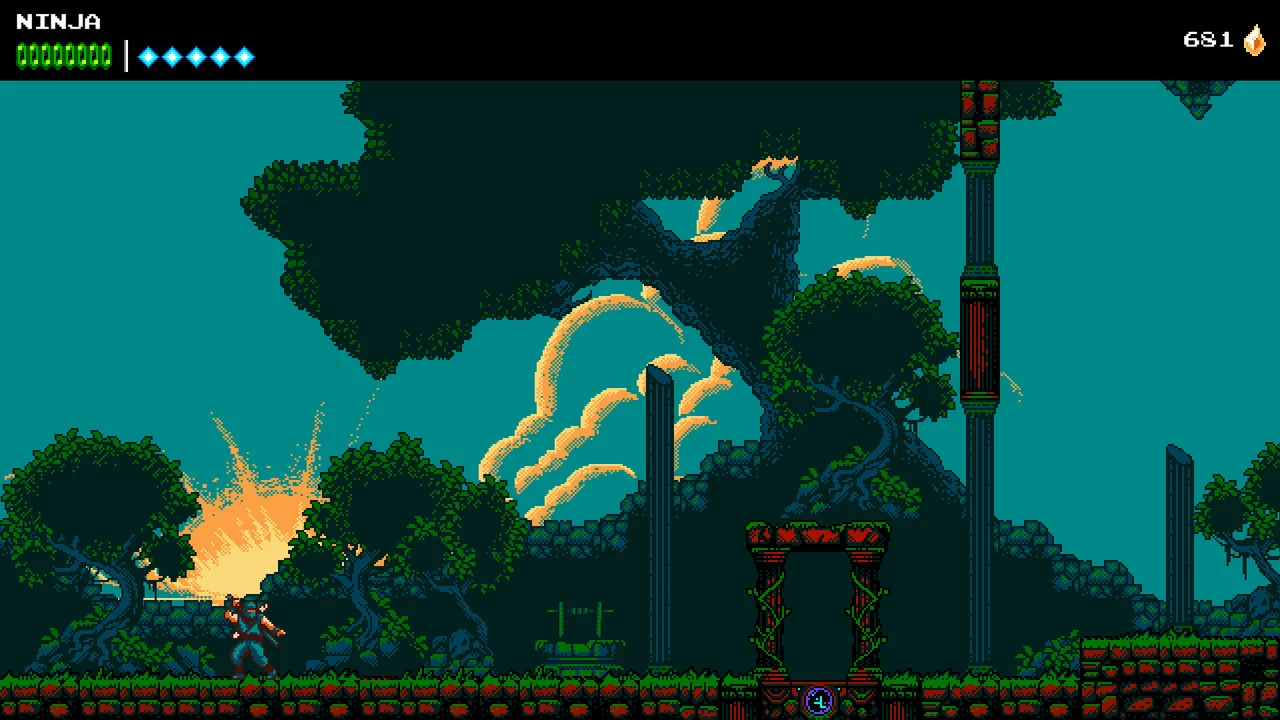
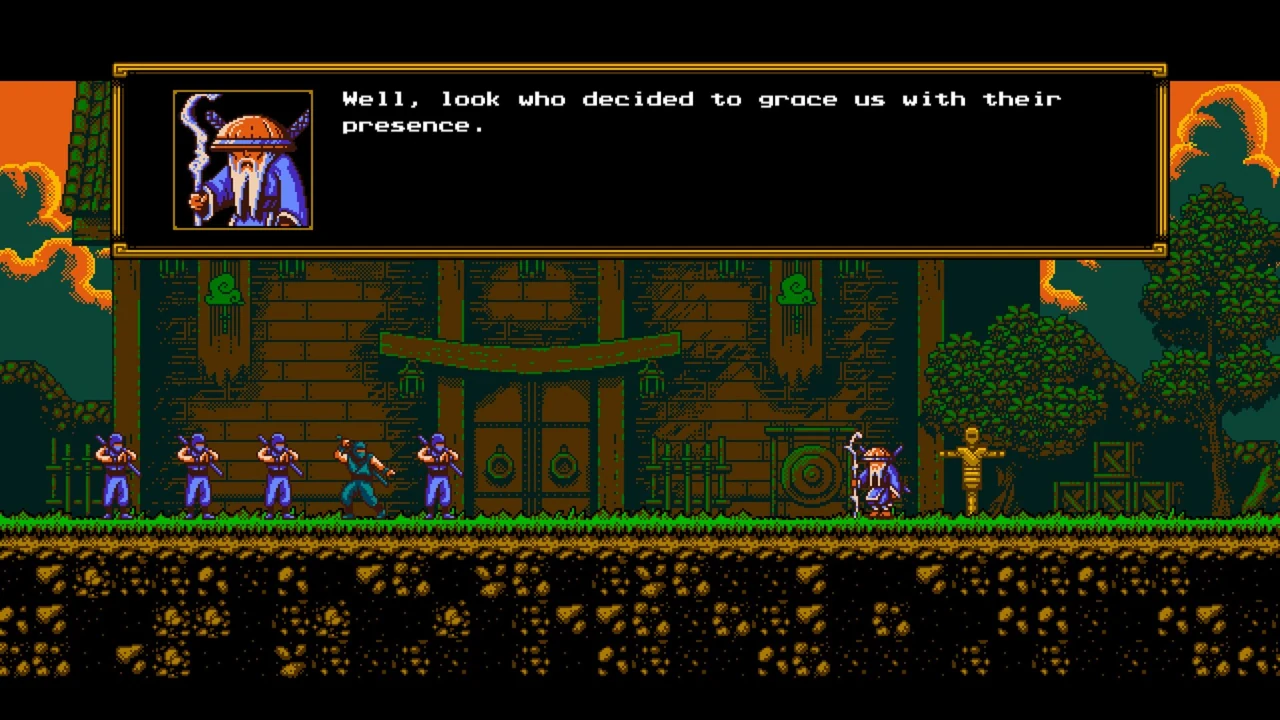
The Messenger uses both 8-bit and 16-bit visual styles, tying its retro influences to the time-travel premise. That relationship gives the changing presentation a purpose beyond nostalgia: an area can suggest a different period while remaining part of the same journey. The game also emphasises an offbeat cast and humour, which helps separate the ninja's mission from a uniformly solemn fantasy quest. Rainbowdragoneyes is credited with the chiptune soundtrack, another component of the deliberate period styling. We value the consistency between the game's movement-led identity and its presentation. Readers should still judge the look on its own merits; familiarity with older games is not a requirement, and nostalgia alone does not guarantee that a demanding platforming structure will suit them.
Choose the kind of challenge you want
The Messenger is a useful choice for someone who likes platforming but also wants the route through the world to become a problem worth thinking about. New abilities and hidden branches give improvement two forms: performing movement more confidently and understanding where that movement can take you. Our reasons-to-return assessment reflects those discoveries and the opportunity to approach familiar challenges more deliberately. It does not assume a particular completion time or promise an endless stream of new content. Celeste is the clearer comparison for a reader whose priority is concentrated movement challenges with less emphasis on a spreading adventure map. Pick The Messenger when the prospect of an action game changing its shape sounds like a reward rather than an interruption. The shift between visual eras accompanies a changing adventure structure, giving the presentation a practical role.
The verdict
A nimble platform adventure whose shifting structure rewards more than straightforward stage clearing. The shift between visual eras accompanies a changing adventure structure, giving the presentation a practical role.
Reasons to play
- Movement and exploration form a clear mechanical identity
- Changing visual eras support the time-travel premise
- Branching routes give upgrades a reason to matter
Reasons to think twice
- Platforming demands may exclude some casual players
- The changing structure may not suit readers wanting only linear stages
See the game
Assist & accessibility
Explore the available settings and control options on the official game page before choosing your setup.
Parents’ guide
Players: Single-player. No in-game purchase marker in the checked Steam listing. Separate downloadable content may be sold.
Age classification: 7. Nintendo Switch edition; not a separate PC classification
A useful starting tip
Concentrate on linking movement actions reliably before treating every hidden route as a first-attempt objective.
A different direction
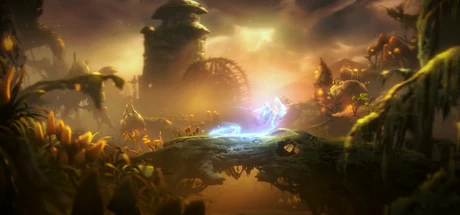
Compare this with Ori and the Will of the Wisps: Niwen's scenery is most impressive when you are moving through it. Ori and the Will of the Wisps connects its luminous landscapes to a generous movement toolkit, making new abilities feel like new ways to inhabit the world.
Official sources
Reviewed: November 2026
You might also like
 TUNICRead review →
 Ori and the Will of the WispsRead review →
 Chicory: A Colorful TaleRead review →