THE DESTINATION / Platformer
Cuphead
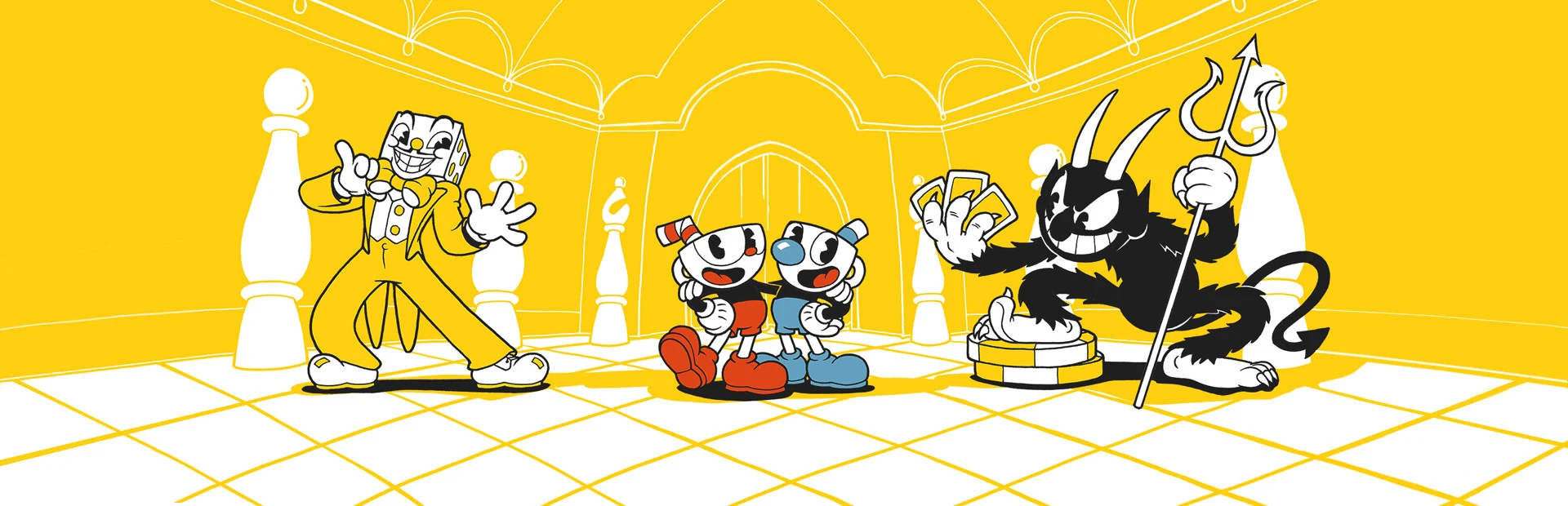
Cuphead's islands are a gallery of encounters rather than a world built for wandering. Each boss transforms animation into a place you must learn to navigate, making spectacle and precise movement inseparable.
TRAVEL NOTES
Game facts
- Developer
- Studio MDHR Entertainment Inc.
- Publisher
- Studio MDHR Entertainment Inc.
- Released
- 29 September 2017
- Platforms
- Windows · macOS (Steam edition)
- Model
- Paid game
- PEGI
- 7 · Fear, Violence — Steam UK listing
- Players
- Single-player · Multi-player · Co-op · Shared/Split Screen Co-op
- Length
- Medium
- Difficulty
- 5 / 5 · Demanding
- Steam Deck
- Verified
PEGI source ↗ · Steam Deck status source ↗
Edition: Base game
The score, explained
The interest and responsiveness of the core decisions and actions.
How progression, exploration and goals fit together.
The coherence of the visual, musical and narrative presentation.
How clearly the game explains its rules and offers useful ways to engage.
The depth of optional goals, alternative approaches and reasons to return.
The First Hours
The island map initially suggests a charming place to wander, but Cuphead quickly reveals its real destinations: tightly staged encounters with extravagant personalities. Entering a fight means learning where a boss attacks, what changes between phases and how to keep moving without losing track of the target. Running, jumping, dashing and parrying pink objects form a small but demanding vocabulary. Weapon choices provide another way to approach a particular pattern, while run-and-gun stages offer movement challenges outside the main boss format. The opening establishes an important distinction for this atlas. The world is not primarily explored by walking further into a landscape. It unfolds through performances, with each successful attempt granting access to more of an encounter's visual and mechanical invention rather than simply another stretch of scenery.
Why It Works
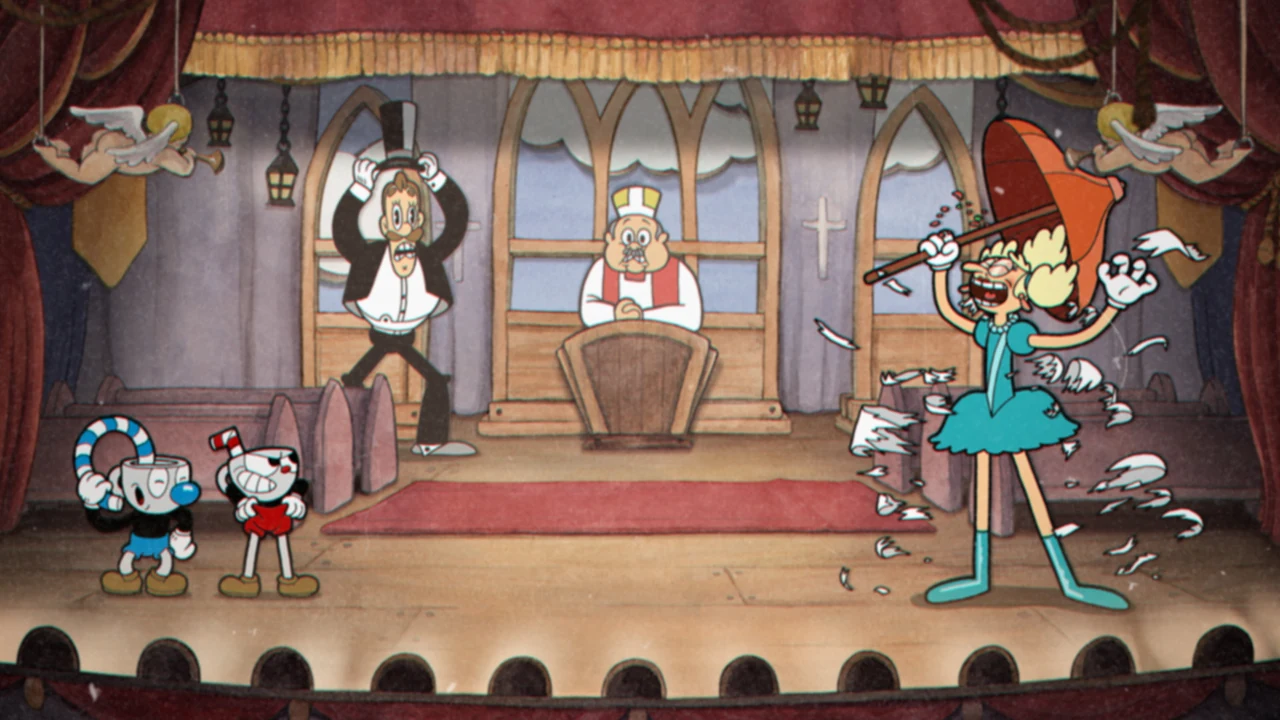
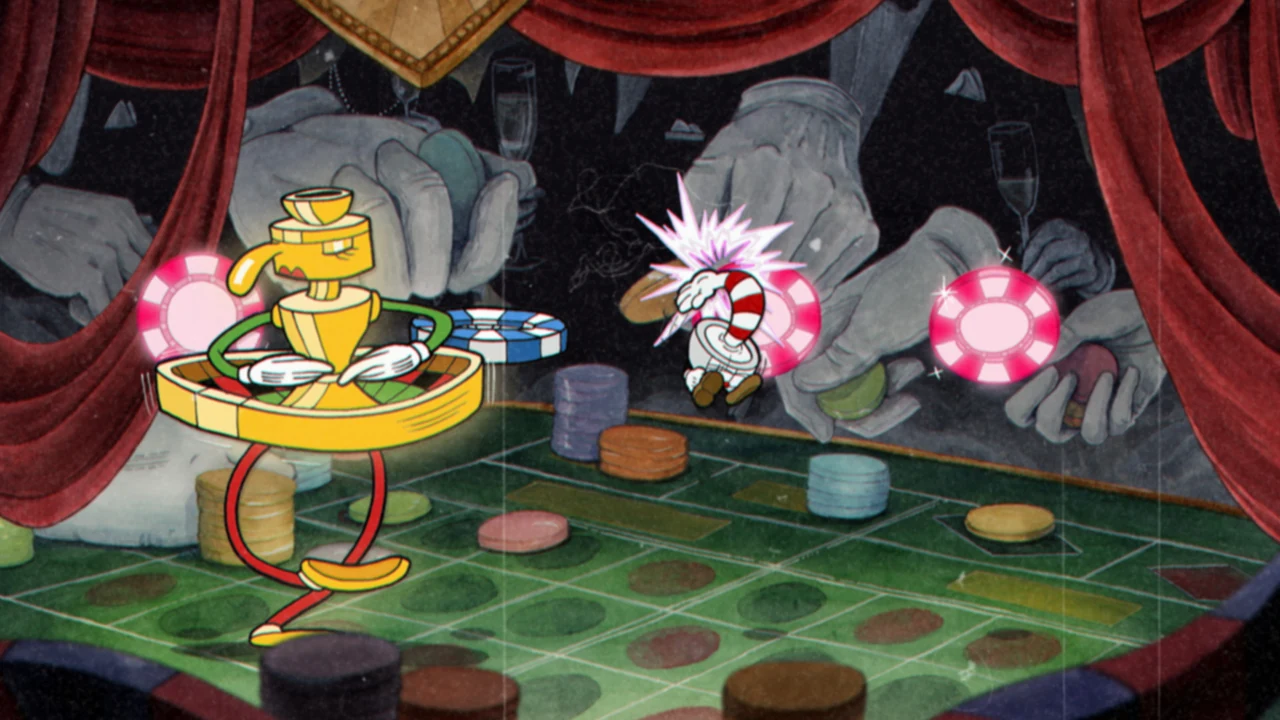
The animation succeeds because it gives danger a personality. A changing expression, sudden transformation or extravagant attack makes an opponent memorable, but it also supplies the patterns you need to recognise. The encounter becomes a kind of moving landscape, with safe positions and dangerous trajectories repeatedly redrawn around the player. That relationship makes reaching another phase satisfying on two levels: it is progress towards victory and access to another piece of visual imagination. The consistent cartoon world helps tie very different opponents together, while the variety of attacks prevents the format from feeling visually uniform. Cuphead is therefore a valuable counterpoint to conventional scenic adventures. It demonstrates that a game can build a convincing visual world through a sequence of carefully authored confrontations rather than through a large connected map.
Where It Stumbles
Admiring the presentation does not remove the need to perform. A spectacular later phase can remain out of reach until the earlier patterns become reliable, and repeated openings may lose some of their charm when progress stalls. Busy animation can also make the relevant hazard harder to isolate, especially while an encounter is still unfamiliar. The island map offers breathing room but not an alternative exploration path around every demanding fight. Local cooperation changes the experience without making the encounter automatically simple. For a reader drawn chiefly by images of the world, this is the crucial limitation: the most interesting material is embedded in challenge. There is no promise that an appreciation of the art alone will provide a comfortable route through everything that art has to offer.
Who Should Play It
Choose Cuphead if you want visual imagination to be something you actively learn. It suits players who enjoy recognising an attack, finding a better position and discovering how a familiar opponent changes under pressure. The animation gives those repetitions a distinctive reward, especially if a new phase is as exciting to see as it is to solve. It is less suitable when your preferred kind of travel involves quiet observation or choosing a different path whenever a challenge becomes frustrating. The recommendation here is deliberately specific. Cuphead is a remarkable destination for performance-driven sightseeing: its characters and transformations are central attractions, but reaching them consistently is part of the game. Enjoyment depends on welcoming that connection rather than wishing the encounters would step aside so the cartoon could continue.
The verdict
Cuphead's islands are a gallery of encounters rather than a world built for wandering. Each boss transforms animation into a place you must learn to navigate, making spectacle and precise movement inseparable.
Reasons to play
- Boss arenas have distinctive visual personalities
- Changing phases reward close observation
- Animation makes repeated encounters memorable
Reasons to think twice
- Seeing the next spectacle requires overcoming substantial challenge
- The overworld is a frame for encounters, not a deep exploration space
See the game
Assist & accessibility
Explore the available settings and control options on the official game page before choosing your setup.
Parents’ guide
Players: Single-player · Multi-player · Co-op · Shared/Split Screen Co-op. No in-game purchase marker in the checked Steam listing. Separate downloadable content may be sold.
Age classification: 7. Fear · Violence Steam UK listing
A useful starting tip
Watch a boss's attack sequence long enough to recognise a safe opening before trying to maximise damage throughout the whole fight.
A different direction
Compare this with Neva: Neva uses its changing companion relationship to give a visually striking journey direction. The landscapes are memorable because movement, danger and the wolf's growth keep altering how the two travellers occupy them.
Official sources
Reviewed: November 2026
You might also like
 TUNICRead review →
 Ori and the Will of the WispsRead review →
 Chicory: A Colorful TaleRead review →